

The Science of Movement: A Guide to Biomechanics in Sport and Exercise
Team Meloq
Author
The biomechanics of sport and exercise is the science of human movement. It applies the principles of mechanics—the branch of physics dealing with forces and motion—to understand how the human body moves. By analysing the internal and external forces acting on our bodies, practitioners can gain insights to enhance athletic performance, refine techniques, and reduce the risk of injury.
How Your Body's Mechanics Dictate Performance
Have you ever wondered about the physics behind a powerful tennis serve or the explosive start of a sprinter? The answers lie in biomechanics. This field provides the "why" behind every jump, throw, and stride by viewing the body as a complex system of levers, forces, and energy transfers.

A great golf swing, for instance, is not just a display of raw strength; it is a finely tuned sequence of movements known as a kinetic chain. Energy is transferred from the ground, up through the legs and torso, and finally unleashed into the club head. This entire sequence can be observed, measured, and refined through the lens of biomechanics, aiming for maximal efficiency and power.
Understanding Kinematics and Kinetics
To fully grasp sport and exercise biomechanics, it's essential to understand its two primary branches: kinematics and kinetics. Though they sound similar, they describe different aspects of movement.
Kinematics focuses on describing motion itself—the geometry of movement. It addresses the "what" and "how" of movement by measuring variables like joint angles, limb velocity, and acceleration, without considering the forces that cause the motion.
Kinetics, on the other hand, is the study of the forces that produce, alter, or halt motion. This is the "why" behind the movement, examining factors such as gravity, ground reaction forces, and muscular contractions.
To clarify this distinction, consider the following comparison:
Kinematics vs Kinetics A Quick Comparison
| Concept | What It Measures | Sporting Example |
|---|---|---|
| Kinematics | The description of motion (e.g., speed, angle, distance, acceleration). | Measuring the peak height of a basketball player's jump or the angle of their knee during landing. |
| Kinetics | The cause of motion (e.g., forces, torque, momentum). | Using a force plate to measure the ground reaction force a volleyball player generates to jump. |
In a practical scenario, a kinematic analysis of a runner might track the angle of their knee at foot strike, while a kinetic analysis would measure the force that foot absorbs from and exerts on the ground. Both are needed for a comprehensive understanding of the movement.
The Levers of Your Body
The human body can be viewed as a sophisticated system of levers. Bones act as the rigid bars, joints serve as the pivots (or fulcrums), and muscles provide the force to initiate movement. The specific arrangement of these components determines the mechanical advantage—or disadvantage—for any given task.
A bicep curl is a classic example. The elbow joint is the fulcrum, the forearm is the lever arm, and the biceps muscle contracts to provide the force needed to lift the weight. The efficiency of this lift is dictated by these mechanical relationships.
By analysing these lever systems, coaches and therapists can modify an exercise to make it safer or more effective. For example, changing hand position during a push-up alters the leverage at the shoulder joint, which shifts the muscular focus and the stress on the joint itself. A deeper understanding of these foundational principles is crucial. To explore how these elements interact, you can review the force and velocity relationship in our detailed guide. This knowledge empowers professionals to build more resilient athletes and design effective rehabilitation programs.
The Rise of Movement Science in Athletics
The field of biomechanics evolved from simple observations about how the human body moves. While early pioneers laid the foundation, the significant expansion in the biomechanics of sport and exercise occurred when researchers, coaches, and clinicians began to collaborate more closely.
This shift from isolated academic inquiry to a connected global community marked a new era. The establishment of international organizations helped standardize research methods and create a common vocabulary. Consequently, a discovery in a European laboratory could be understood, tested, and implemented by a performance coach in North America, creating a powerful feedback loop that accelerated scientific progress. This collaborative spirit has been instrumental in advancing everything from athlete training methodologies to the design of safer sporting equipment.
From Observation to Application
Initially, biomechanics was largely descriptive, focused on analysing the movements of elite athletes to identify the characteristics of their success. Over time, the focus shifted to a more prescriptive approach. Scientists began using their findings not just to explain success, but to create frameworks for others to achieve it. This involved identifying optimal movement patterns that could reduce energy expenditure and minimise stress on the body.
This evolution led to significant breakthroughs. For example, detailed analyses of running mechanics have informed the design of footwear that better supports the foot and absorbs impact. Similarly, studies on throwing motions have reshaped how pitchers and quarterbacks are trained to maintain shoulder and elbow health. The guiding principle was simple yet powerful: if movement can be precisely measured and understood, it can be systematically improved. This principle is now a cornerstone of modern sports physiotherapy, conditioning, and rehabilitation.
The Power of a Unified Community
The impact of this global collaboration cannot be overstated. By creating shared platforms for research, organizations fostered an environment where data could be pooled from around the world. Best practices became based on a substantial body of evidence rather than anecdotes or individual coaching philosophies.
A key development was the founding of the International Society of Biomechanics in Sports (ISBS) in 1982, which brought together professionals from over 50 countries. The real-world results of such collaboration are evident. For instance, some research suggests that the focused application of biomechanical analysis has contributed to a notable reduction in lower limb injuries among elite soccer players, attributed to improved training protocols and footwear. You can explore the research behind these biomechanical advancements for more detailed insights.
The Data-Driven Athlete of Today
Today, the biomechanics of sport and exercise is a data-rich field that directly influences athletic careers. What began as simple observation has evolved into a sophisticated science impacting every aspect of an athlete's journey.
- Injury Prevention: Faulty movement patterns can now be identified and corrected before they lead to chronic issues.
- Performance Optimization: Technique is refined to produce more power, speed, or endurance with greater efficiency.
- Smarter Rehabilitation: Objective data now guides the recovery process, providing clear indicators for when an athlete is ready to safely return to competition.
Understanding this evolution—from foundational principles to a collaborative, data-driven science—highlights the significant progress in the field. It reflects a commitment not only to pushing the limits of human performance but also to safeguarding the long-term health and well-being of every athlete.
Key Tools for Measuring Athletic Movement
To properly apply the principles of the biomechanics of sport and exercise, one must measure what is often invisible to the naked eye. Experts in physiotherapy and performance rely on specific technologies to convert subtle movements and forces into objective data. These tools provide a precise view of how an athlete's body functions under physical stress.
A coach might observe that a basketball player's jump appears explosive, but they cannot see the precise force produced or the subtle imbalances between the left and right legs. Specialised tools bridge this gap by translating physical actions into measurable insights that inform everything from rehabilitation protocols to elite training programs.
Measuring Angles with Goniometry
One of the most fundamental assessments in movement analysis is determining the range of motion (ROM) at a joint. For this, practitioners use a goniometer. In its simplest form, it functions like a protractor for the human body, allowing a clinician to measure the precise angle of a joint during a movement, such as the degree of knee flexion in a squat.
These measurements are critical for several reasons. Following an injury or surgery, tracking ROM with a goniometer provides objective evidence of recovery progress (1). It helps a therapist determine if a joint is returning to its normal function or if the rehabilitation plan needs adjustment. For healthy athletes, achieving optimal joint angles is linked to both performance and injury prevention, making goniometry a cornerstone of functional movement screening.
Quantifying Strength with Dynamometry
While a goniometer measures how far a joint can move, a dynamometer measures how much force the surrounding muscles can generate. Handheld dynamometers provide an objective measure of muscle strength, offering a significant improvement over subjective "push against my hand" tests.
The process is simple: the individual pushes or pulls against the device with maximal effort, and it provides a precise reading in units of force like pounds or newtons. This data is invaluable for:
- Establishing a Baseline: Knowing an athlete's peak force production when healthy provides a clear benchmark for future assessments.
- Monitoring Rehabilitation: After an injury, a dynamometer can track strength gains and identify lingering weaknesses that could increase the risk of re-injury. For example, limb symmetry deficits are a known risk factor for a second ACL tear (2).
- Identifying Imbalances: Strength can be compared between opposing muscle groups or between left and right limbs to uncover asymmetries that may need to be addressed in training.
By replacing subjective strength estimates with quantitative data, clinicians can make more informed decisions. An athlete doesn't just "feel stronger"—the dynamometer provides a number that confirms it, offering powerful feedback that helps guide a safe return to sport.
Uncovering Power with Force Plates
The force plate is a cornerstone tool in biomechanics. It is a highly sensitive platform that measures ground reaction forces—the forces exerted by the ground on a body in contact with it. Every time an athlete jumps, lands, runs, or cuts, the force plate captures the dynamics of their interaction with the ground.
This technology reveals key performance metrics that are impossible to see otherwise. During a vertical jump test, a force plate can calculate not just jump height but also the rate of force development (how quickly force is generated) and impact absorption upon landing. Inefficient landing strategies are a significant risk factor for lower limb injuries, and force plates can help identify athletes who are not absorbing impact effectively (3). For a complete look at available athletic movement tools, it's worth exploring a broader list.
These devices are considered the gold standard for assessing explosive power and understanding an athlete's movement strategies. To learn more, you can explore how force platforms are used in biomechanics. The data from these analyses allows for the design of targeted programs to make an athlete more explosive and refine their technique for safer, more powerful movement.
References
- Gajdosik RL, Bohannon RW. Clinical measurement of range of motion. Review of goniometry emphasizing reliability and validity. Physical Therapy. 1987;67(12):1867-72.
- Grindem H, Snyder-Mackler L, Moksnes H, Engebretsen L, Risberg MA. Simple decision rules can reduce reinjury risk by 84% after ACL reconstruction: the Delaware-Oslo ACL cohort study. British Journal of Sports Medicine. 2016;50(13):804-8.
- Padua DA, Marshall SW, Boling MC, Thigpen CA, Garrett WE Jr, Beutler AI. The Landing Error Scoring System (LESS) is a valid and reliable clinical assessment tool of jump-landing biomechanics: The JUMP-ACL study. The American Journal of Sports Medicine. 2009;37(10):1996-2002.
Putting Biomechanical Analysis into Practice
The true value of biomechanics of sport and exercise is realised when theoretical knowledge and technology are applied in practical settings. This is where practitioners move from the laboratory to the clinic or training field, using structured assessments to evaluate how an athlete's body performs under specific conditions.
These practical protocols enable physiotherapists and coaches to identify potential weak links, asymmetries, and inefficiencies that might otherwise go unnoticed. It involves more than just observing movement; it is about systematically measuring that movement to obtain actionable data. The typical flow of a biomechanical assessment builds a comprehensive picture, starting with joint motion, progressing to muscle force, and culminating in an assessment of dynamic ground interaction.
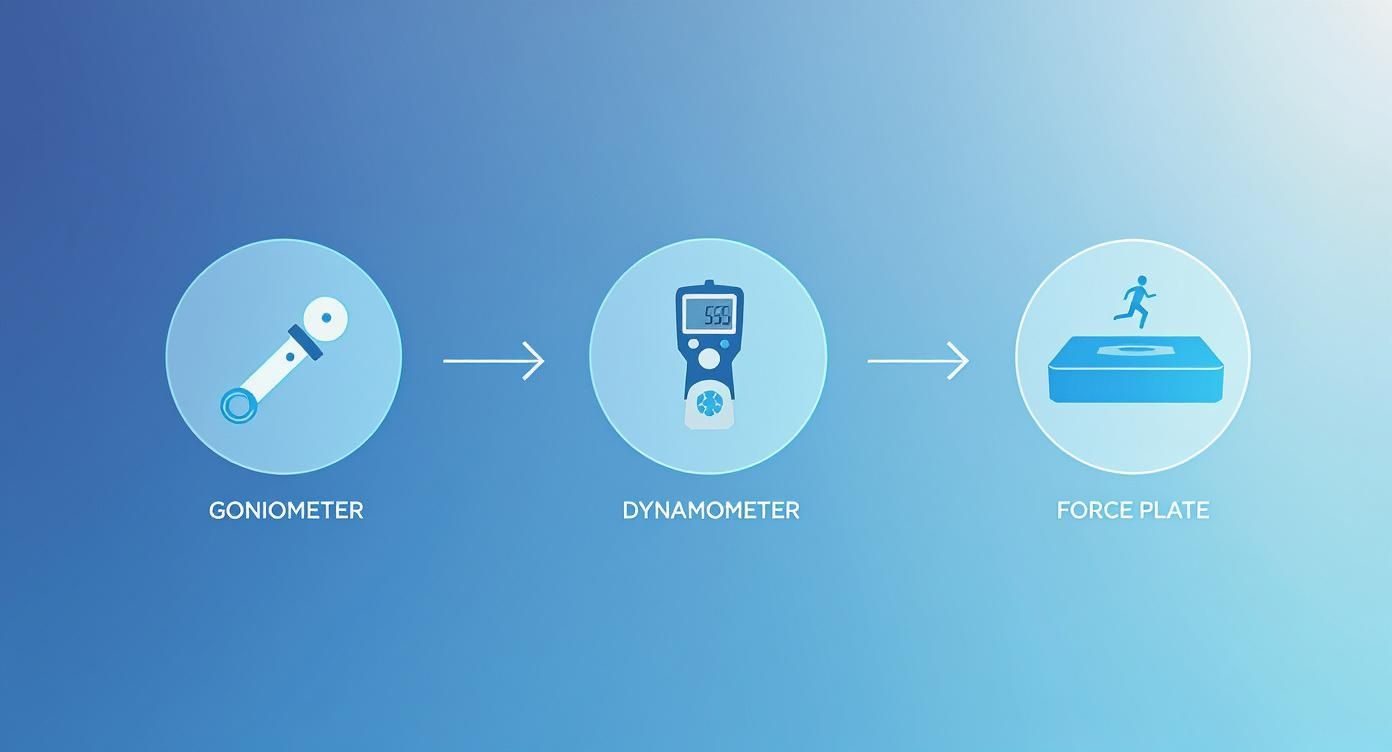
This process demonstrates how a comprehensive movement profile can be constructed layer by layer—from foundational range of motion to explosive power output.
Functional Movement Screening
A common starting point is the Functional Movement Screen (FMS), a system comprising seven fundamental movements designed to assess an athlete's mobility and stability. This is not a test of raw strength or skill but a method for evaluating how well the body coordinates basic patterns like squatting, lunging, and reaching.
The screen helps to quickly identify significant limitations or asymmetries. For instance, a notable imbalance during a deep squat could indicate underlying issues with hip mobility or core stability (1). Identifying these "weak links" before they contribute to an injury is a key aspect of modern injury prevention strategies. It has been suggested that an FMS score below a certain threshold may be associated with an increased risk of injury in some athletic populations, though this is a topic of ongoing research and debate (2).
Squat Analysis: Uncovering Imbalances
A detailed analysis of the squat serves as a prime example of biomechanics in action. Using a trained eye or slow-motion video from a smartphone, a clinician can break down this foundational movement. The goal is to identify subtle yet critical deviations from optimal form.
Common faults observed during a squat analysis include:
- Knee Valgus: The inward collapse of the knees, a pattern often associated with weak hip abductors that can increase stress on the ACL.
- Asymmetrical Weight Shift: A noticeable lean to one side, which may point to a strength deficit or a mobility restriction.
- Excessive Forward Lean: An excessive forward tilt of the torso, potentially indicating poor ankle mobility or weak quadriceps, leading to compensatory stress on the lower back.
Each observation provides a clue. By addressing these faults with targeted exercises, practitioners can not only improve the squat itself but also foster safer, more efficient movement patterns that transfer to an athlete's specific sport.
Drop Jump Test: Assessing Reactive Strength
While the squat assesses controlled movement, the drop jump test evaluates how an athlete handles impact and generates power rapidly. This test measures the efficiency of the stretch-shortening cycle (SSC), a key mechanism for explosive actions like sprinting and jumping.
The protocol involves an athlete dropping from a box and immediately performing a maximal vertical jump upon landing. Using a force plate, key metrics such as contact time and jump height can be measured. An efficient drop jump is characterised by minimal ground contact time and maximal jump height, indicating an effective SSC.
Poor performance, such as long contact times or low jump height, may suggest that an athlete is not utilising elastic energy effectively and could have a higher injury risk due to suboptimal force absorption strategies (3). The data obtained is valuable for performance training. You can learn more about how a force plate can be used to improve vertical jump performance here. These practical tests are how biomechanical principles are translated into tangible data that helps build stronger, more resilient athletes.
References
- Cook G, Burton L, Hoogenboom BJ. Functional movement screening: the use of fundamental movements as an assessment of function‐part 1. International Journal of Sports Physical Therapy. 2006;1(2):62-71.
- Kiesel K, Plisky PJ, Voight ML. Can serious injury in professional football be predicted by a preseason functional movement screen? North American Journal of Sports Physical Therapy. 2007;2(3):147-58.
- Flanagan EP, Comyns TM. The use of contact time and the reactive strength index to optimize stretch-shortening cycle training. Strength and Conditioning Journal. 2008;30(5):32-8.
Turning Biomechanical Data into Actionable Insights
Data collection is only the initial phase in the application of biomechanics of sport and exercise. The real value is realised when these numbers are translated into meaningful strategies that enhance an athlete's performance or guide a patient's safe return to activity. This process transforms raw metrics into a clear roadmap for improvement.
Interpreting this data requires looking beyond a single number to understand the story it tells about an athlete's movement. It involves a deep understanding of key performance indicators and their connection to real-world outcomes, such as a higher jump, a faster sprint, or a reduced risk of re-injury.
Decoding Key Performance Metrics
Two of the most powerful metrics derived from tools like force plates are the Rate of Force Development (RFD) and limb symmetry. While they may sound technical, their practical application is immense for any sports physiotherapist or performance coach.
Rate of Force Development measures how quickly an athlete can generate force. It is a metric for "explosiveness." It's not solely about total strength, but how rapidly that strength can be applied. For athletes in sports requiring quick, powerful movements—a basketball player securing a rebound or a sprinter launching from the blocks—RFD is crucial. A high RFD indicates an athlete can access their strength almost instantaneously (1).
Limb Symmetry compares the output of one limb to the other, typically expressed as a percentage. In a rehabilitation setting, this is one of the most critical metrics to track. A significant imbalance between the left and right legs following an injury, for instance, is a major cautionary sign. Research suggests that returning to sport with a limb symmetry deficit greater than 10% in strength or power metrics may place an athlete at a higher risk of re-injury, providing clinicians with an objective benchmark for return-to-play decisions (2).
Case Study: A Basketball Player's Vertical Jump
Consider a basketball player whose vertical jump performance has plateaued. A biomechanical assessment using a force plate reveals that while his peak force is adequate, his RFD is low. He possesses the necessary raw strength but is not applying it quickly enough to achieve his desired jump height.
This insight provides a clear direction for his training program, which should pivot from pure strength development to focusing on power and explosiveness. The new plan might include:
- Plyometrics: Exercises like box jumps and depth jumps to train the neuromuscular system to produce force more rapidly.
- Ballistic Training: Lighter-load, high-velocity movements such as jump squats and kettlebell swings to improve the speed of muscle contraction.
By re-testing his RFD periodically, the coach can obtain objective feedback on his progress. The goal is not just a higher jump but improving the underlying biomechanical factor driving that jump.
Case Study: A Runner's Return from ACL Injury
Now, imagine a runner recovering from an ACL reconstruction. She feels strong and is eager to return to running, but subjective feelings can be misleading. Her physiotherapist uses a series of single-leg hop tests on a force plate to assess her limb symmetry.
The data reveals her surgically repaired leg is producing 20% less force and absorbing impact less effectively than her non-surgical leg. This asymmetry is a clear indicator that she is not yet ready to resume running. Doing so would place excessive stress on both her recovering knee and her healthy leg. To understand how these benchmarks are established, you can learn more about what is normative data in our guide.
This insight directs the next phase of her rehabilitation. Her program is modified to include more single-leg strength and stability exercises for the weaker side. Only when her limb symmetry consistently falls below a 10% deficit will the physiotherapist confidently clear her for a gradual return-to-running protocol. This data-driven approach removes guesswork and prioritises her long-term health.
These examples illustrate how biomechanical data transforms a general approach into a highly specific and individualised plan. By understanding what the numbers signify, practitioners can create targeted interventions that lead to better, safer, and more durable outcomes.
References
- Maffiuletti NA, Aagaard P, Blazevich AJ, Folland J, Tillin N, Duchateau J. Rate of force development: physiological and methodological considerations. European Journal of Applied Physiology. 2016;116(6):1091-116.
- Capin JJ, Snyder-Mackler L, Risberg MA, Grindem H. Keep calm and carry on testing: a substantive commentary on the methodology of the 'ACLR-SISA' study. British Journal of Sports Medicine. 2020;54(12):e6.
Bringing Modern Tools Into Your Practice
High-level biomechanical analysis is no longer confined to expensive university laboratories. An increase in accessible technology, from wearable sensors to powerful video analysis applications on smartphones, has made objective measurement available to clinics and training facilities of all sizes. This democratisation of technology allows for the collection of accurate data in real-world settings—on the field, in the gym, or during a patient's daily activities.
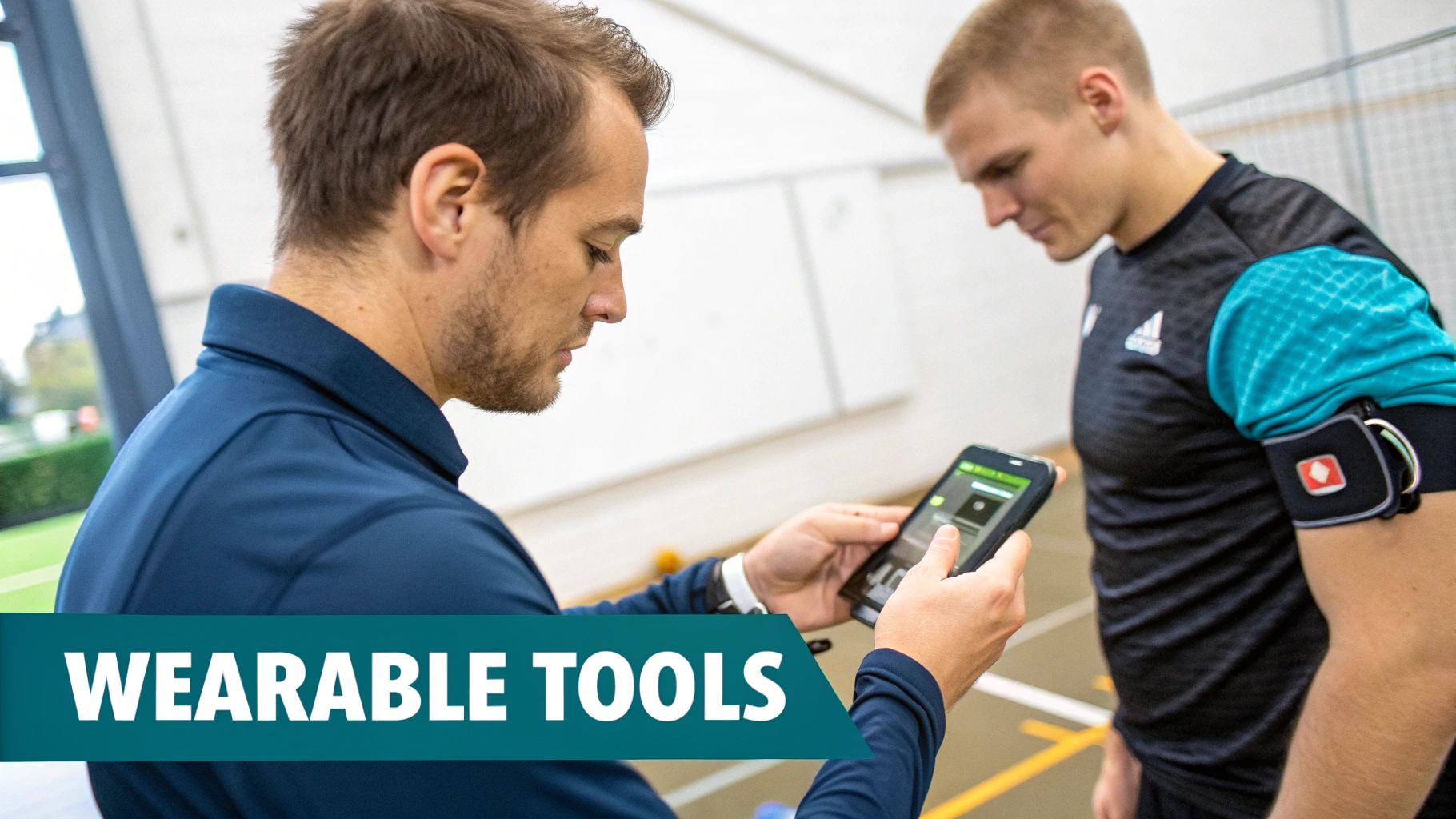
The primary goal is to move beyond subjective observations—such as "that looks better"—and into the realm of quantified evidence. Presenting an athlete with a graph showing their progress or pointing to a specific improved metric can create significant buy-in and help them connect more deeply with their program.
Selecting the Right Tools for Your Needs
The appropriate technology depends on your goals, clientele, and clinical setting. It is not necessary to have a six-figure laboratory to begin applying the principles of the biomechanics of sport and exercise. The key is to select tools that answer your most important clinical or performance questions.
Before investing, consider these key factors:
- Validity and Reliability: Does the device accurately measure what it claims to measure, and does it produce consistent results? Look for peer-reviewed studies that compare the device against gold-standard laboratory equipment (1).
- Portability and Ease of Use: Can the tool be set up and used quickly? A device that requires a lengthy configuration process is unlikely to be used regularly in a busy clinical environment.
- Actionable Data: Does the output provide clear, easy-to-understand metrics that facilitate decision-making? Raw, complex data is of little value if it cannot be quickly applied.
The integration of objective measurement tools has been shown to improve diagnostic accuracy and the effectiveness of therapeutic interventions. It enables a more personalised approach to both rehabilitation and performance conditioning by identifying specific deficits that need to be addressed (2).
The Rise of Wearable Sensors
Wearable sensors, such as inertial measurement units (IMUs), have become a game-changer in applied biomechanics. These small devices can be attached to a limb or the torso to measure kinematics—joint angles, velocities, accelerations—during dynamic movements, free from the constraints of a laboratory.
For example, a physical therapist can use an IMU to track a patient's shoulder range of motion throughout their day, providing a more complete picture of their functional movement. Similarly, a coach could monitor a pitcher’s arm speed and elbow stress over hundreds of throws to better manage fatigue and reduce injury risk.
Smartphone Apps and Video Analysis
The camera in your smartphone is a powerful tool. Modern smartphones can capture high-speed video, and when combined with specialised analysis apps, they become potent biomechanics tools. These applications allow you to draw angles, measure distances, and analyse movement frame-by-frame.
This approach is effective for:
- Gait analysis in runners to identify issues like over-striding.
- Lifting technique in weightlifters to detect potentially harmful form faults.
- Jump-landing strategies in athletes to screen for high-risk movement patterns.
By incorporating these modern, accessible tools into our workflows, we can obtain better data, make more informed decisions, and demonstrate progress to clients and athletes in a tangible way. It is about empowering both the practitioner and the individual with the objective insights needed to move better, prevent injury, and unlock new levels of performance.
References
- Poitras I, Dupuis F, Bielmann M, et al. Validity and reliability of a wearable sensor for the assessment of human movement. Sensors (Basel). 2019;19(7):1534.
- Mentiplay BF, Banky M, Clark RA, et al. Lower limb biomechanics during a single leg squat in a healthy population. Gait & Posture. 2018;60:192-7.
Your Questions, Answered
The field of sport and exercise biomechanics can appear complex, but its core principles are both straightforward and powerful. Here are answers to some common questions from practitioners and athletes.
Do I Need Expensive Lab Gear to Get Started?
No, it is not necessary. While high-end laboratories provide highly detailed data, you can apply fundamental biomechanical principles using a tool you likely already own: your smartphone.
Using slow-motion video to analyse key movements—such as knee alignment during a squat or an athlete's running gait—can offer valuable insights. This simple form of observation is often the first step toward improving performance and preventing injuries, without the need for costly equipment (1).
How Does Biomechanics Actually Help in Rehab?
Biomechanics is foundational to modern, evidence-based rehabilitation. It involves replacing subjective assessments with objective data to guide treatment and monitor an athlete's recovery.
Consider a patient recovering from ACL surgery. A clinician can use tools like dynamometers or force plates to obtain quantitative data on how symmetrically the athlete is loading their legs. This data is crucial for determining when it is safe to progress to more demanding activities, thereby helping to reduce the risk of re-injury (2).
Can This Stuff Help a Weekend Warrior Like Me?
Absolutely. Optimising movement patterns is beneficial for athletes at all levels, not just professionals.
An amateur runner, for example, can use simple video analysis to improve their form. Minor adjustments can lead to significant gains in efficiency, potentially resulting in faster and longer runs with less energy expenditure. More importantly, understanding the biomechanics of sport and exercise can help avoid common overuse injuries like patellofemoral pain syndrome, allowing you to participate in your sport for years to come.
Ready to replace subjective guesswork with objective data? The Meloq ecosystem of portable digital goniometers, dynamometers, and force plates empowers you to measure what matters. Learn more at https://www.meloqdevices.com.

Featured Product
EasyBase Force Plates
Portable dual force plate system for jump testing, balance & rehab. No subscription fees.
Learn More